Holistic wellbeing · 5 min read
What are the benefits of sound healing?
How sound baths and therapeutic sound may support relaxation, reflection and a welcome pause from everyday pressure.
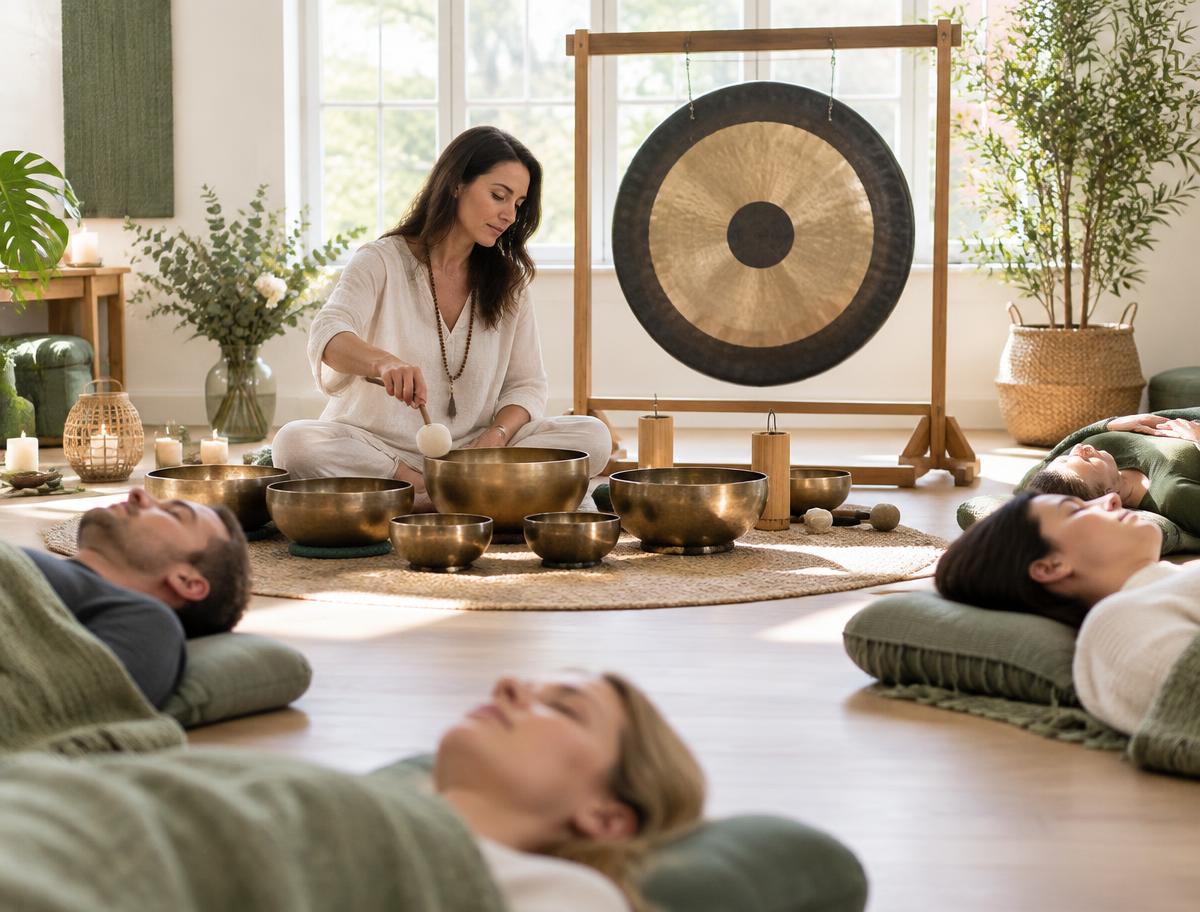
Sound healing is an umbrella term for practices using voice, gongs, singing bowls and other instruments to support relaxation or reflection. Many people describe the experience as a structured chance to slow down and focus inward.
It should be presented as a complementary wellbeing practice, not a replacement for medical or psychological care.
Why people find it restorative
A sound session usually combines a comfortable resting position, sustained tones and focused listening. This can reduce external distractions and create conditions that feel similar to meditation, even for people who find silent practice difficult.
- A defined pause from screens and conversation
- Gentle support for relaxation and body awareness
- A shared experience for groups or teams
- An accessible introduction to mindful attention
What to expect
Sessions often last 45 to 90 minutes. You may lie on a mat or sit, fully clothed, while the practitioner plays around the room. Ask about volume, room accessibility and what to bring before attending.
Choose a responsible practitioner
Tell the facilitator about pregnancy, epilepsy, sound sensitivity, hearing conditions or implanted devices and follow relevant medical advice. A responsible practitioner will explain their training, contraindications and boundaries clearly.
This article offers general information, not individual medical advice. Speak with an appropriately qualified professional about your circumstances.